Beans are a valuable food for their fiber, protein and vitamins but very inexpensive for the money spent. Hopefully the following information will aid in getting the desired results. Beans are worth the wait and effort!
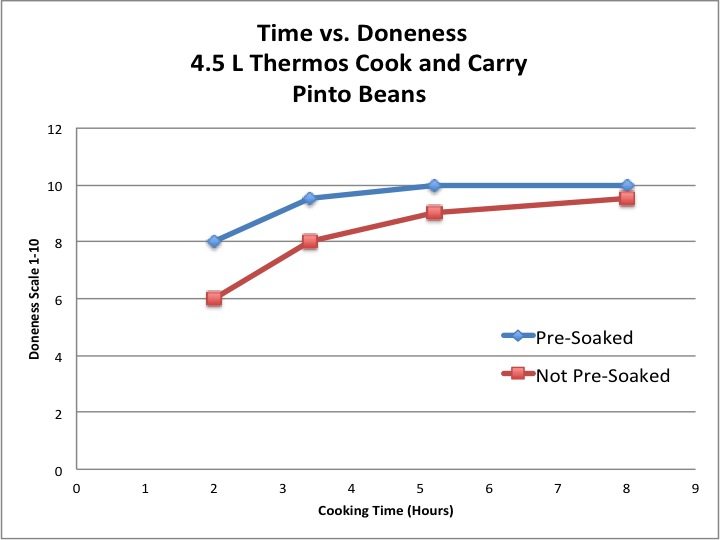
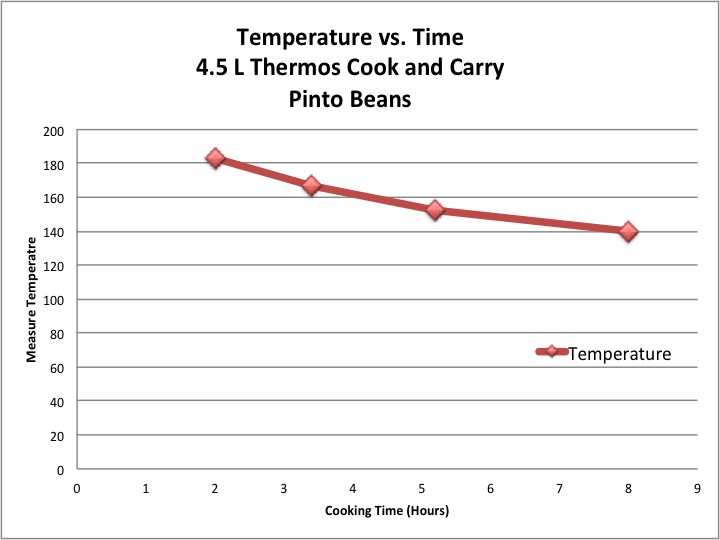
An experiment with variables of time and pre-soak and without pre-soak and was done. The results show the differences between level of doneness versus time and soaking method. The temperature of the beans is shown versus time. Due to the need to open the pot to check the temperature, the temperatures recorded are actually lower than if the cooking had not been disturbed. The time to cook is similar to an electric slow cooker.
Experiment:
Three batches of pinto beans were compared:
- Batch A – Pre-soaked for 8 hours in 3 TBSP table salt dissolved in 4 Quarts of water, rinsed well; After 8 hour pre-soak, they were boiled for 15 minutes and put in the thermal cooker (Cooks Illustrated Brining Method reference below shown in table)
- Batch B – Quick pre-soaked by boiling 1 pound of beans in 4 quarts of plain water for 5 minutes and letting stand for an hour before finishing cooking (bean package); After 1 hour pre-soak, they were boiled for 15 minutes and put in the thermal cooker
- Batch C – Not pre-soaked and boiled for 15 minutes and put in the thermal cooker
The full details of soaking, cooking and time are below.
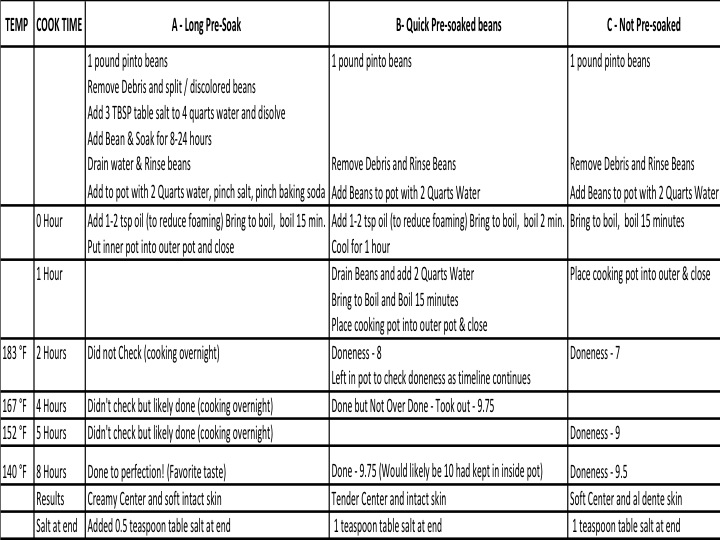
Pre-soaking helps to tenderize the beans and minimize effects when using hard water for cooking and are less flatulent.
When dried beans first begin their rehydration, the little spot that connects to the green bean as it grows is the main source of water entering the bean. As the bean begins to hydrate, the skin starts to soften and continues to do so when in water.
Data showing Cooking Time vs. Doneness for each batch type is graphed below.
Temperature vs. Time was recorded. *Please note that the times are actually higher if cooking without opening the cooker for measurements. Each time the cooker is opened, heat is lost due to experiment data collection.
Equipment used for measurements: Scale, Instant Thermometer, Infrared Thermometer
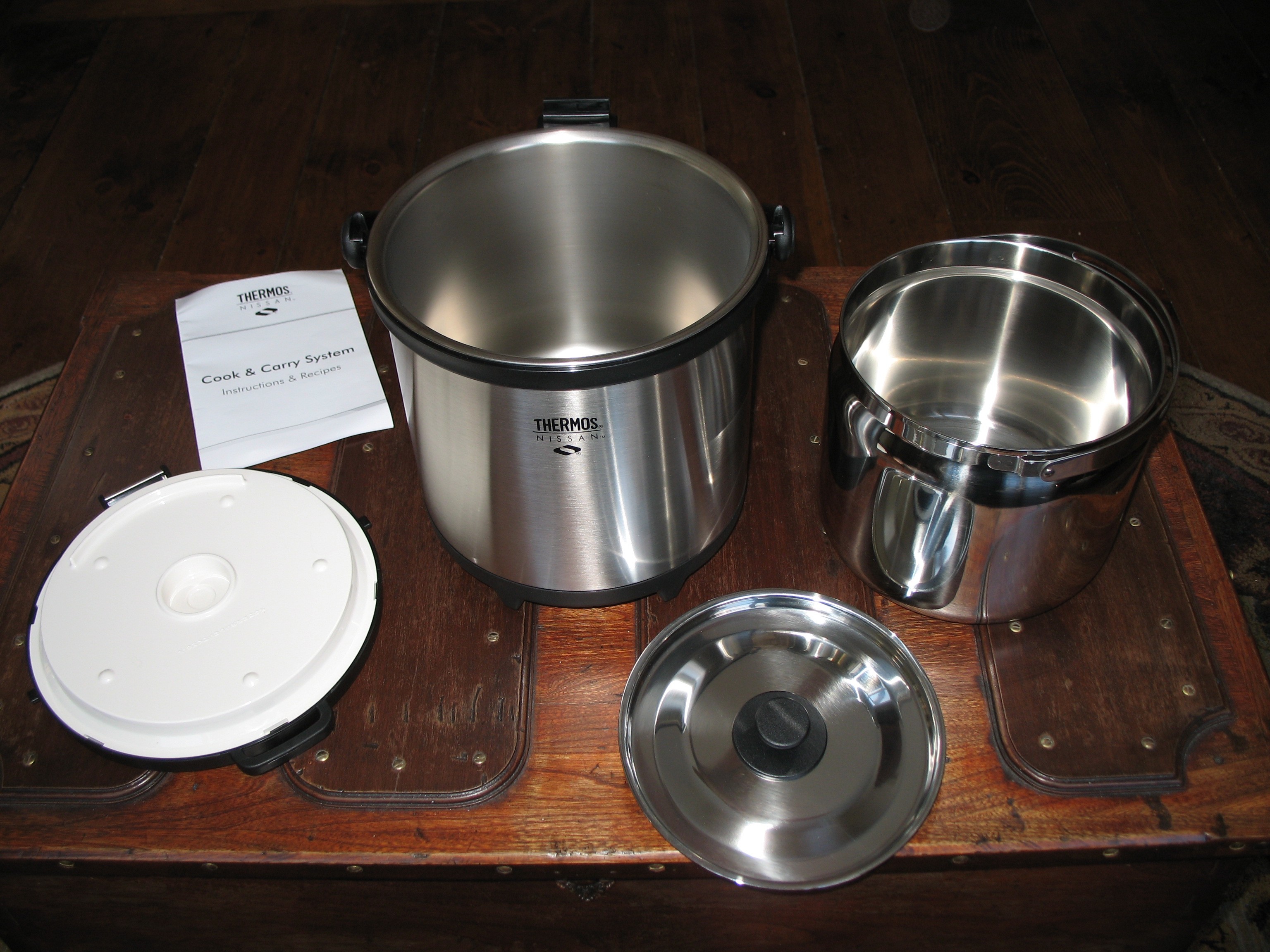
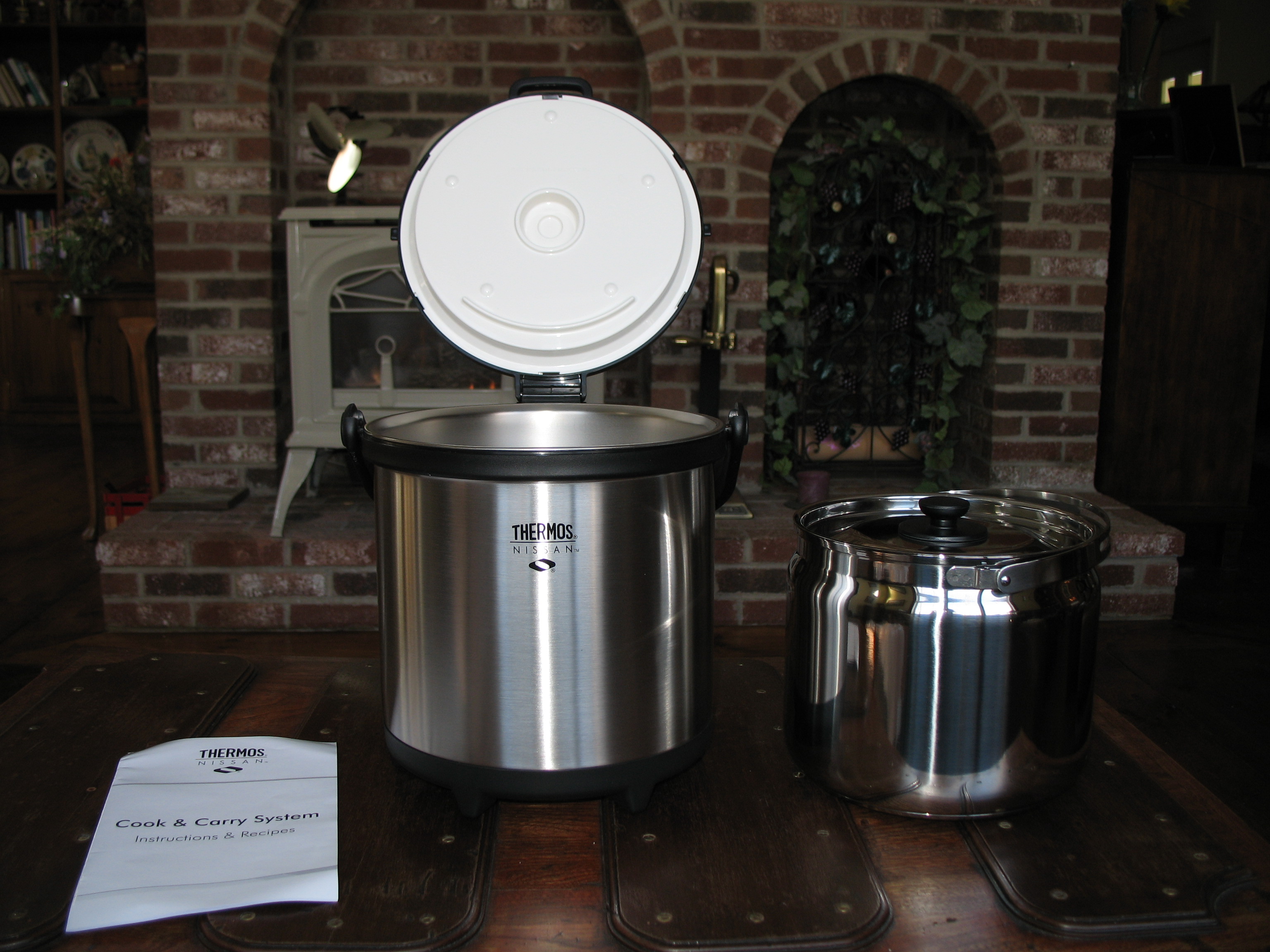
The 4.5Liter Thermos Cook and Carry
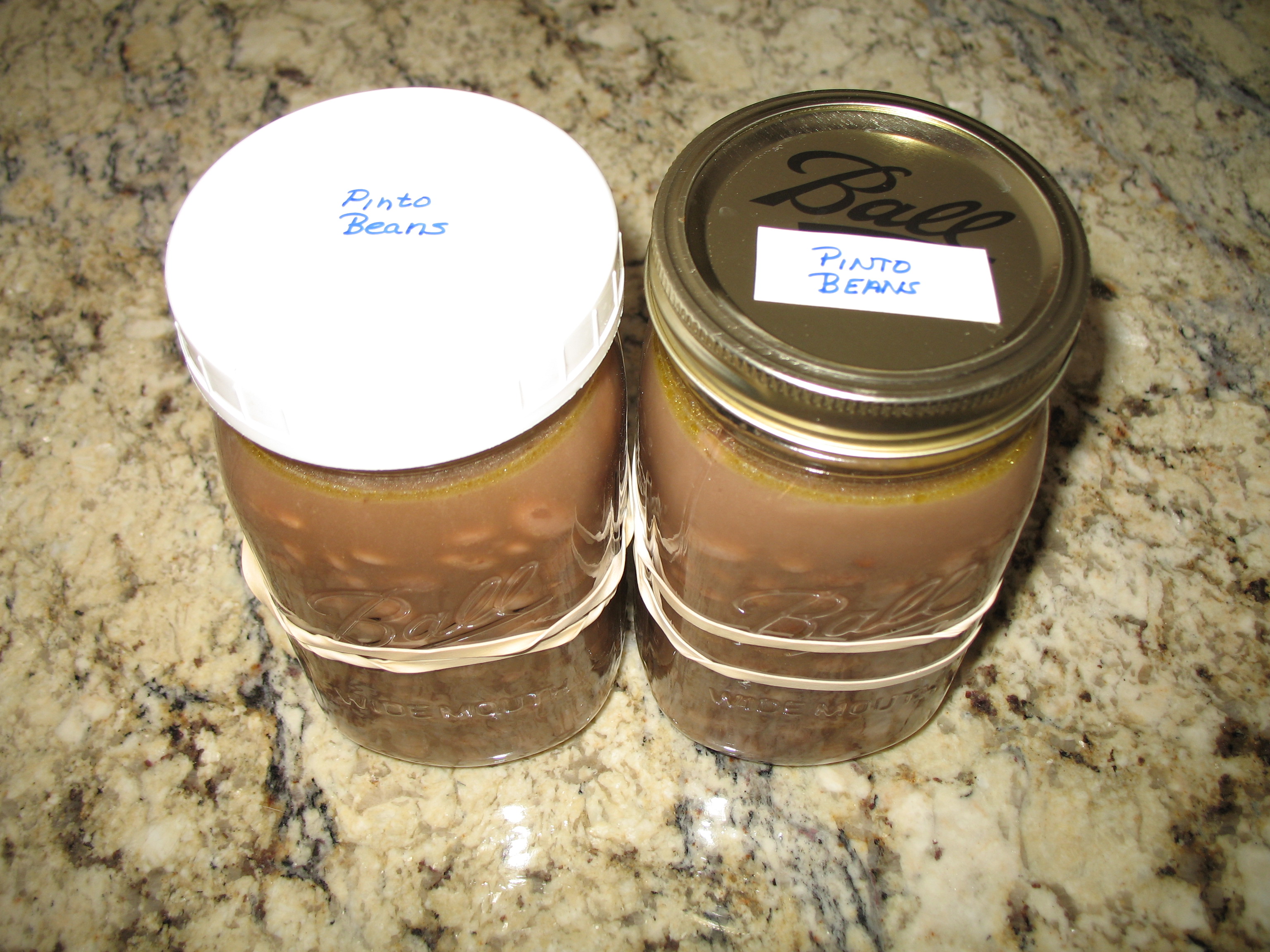
After the Beans finished cooking, they were put into Canning Jars leaving 1.5 inches head space from the top of the rim to the beans. These jars fit upright in most camper refrigerators or can be put in the freezer (head space as described necessary to prevent jar breakage). When standing upright, they more efficiently fill the refrigerator space. The rubber bands help reduce the bumps and rattles. Labels are made from colored electrical tape using a Sharpie. The labels are dishwasher safe and can be reused by simply peeling off and putting on the inside of a cabinet until needed again! The plastic lid is made by Ball and available at good hardware stores or online, but are not for canning but great for freezing and pantry storage of (you guessed it) dried beans!
Bean Math*:
- 1 Pound Dried Beans is $1.69 and makes 8 cups of cooked beans = 21 cents /cup
- 1 can cooked beans is $0.99 and contains 1.75 cups cooked beans = 56 cents /cup
- * Costs are only for the beans not the costs of cooking fuel, time, etc.
Good References on the science of cooking beans are:
- Cook’s Illustrated – The Science of Good Cooking America’s Test Kitchen, 2012
- On Food and Cooking – The Science and Lore of the Kitchen by Harold McGee 2004
Thanks for visiting! Enjoy!!!
 Katy's Camp Kitchen
Wow, thanks for this comparison work! So a long soak with salt is the best…good information to have. I’m just so amazed that beans actually get soft with so little actual cooking!
Hi Micky,
Thank you for your comment!
The salt brine soaking does truly make a difference – just make sure to rinse the beans after the soak 🙂 I have an electric pressure cooker that I have been using at home because it makes the best beans that I had ever had until I used this pre-soak brine method. With the pre-soak and brining method for the thermal cooker (or a crockpot) the beans are equally as good as the pressure cooker with the soft skin and creamy center. The baking soda in the recipe also helps to soften the skin also, but just a pinch is needed.
America’s Test Kitchen has done much work with brining for meats and have had good results with lentils also (to help keep them from disintegrating when cooking in a recipe).
They also did an write-up on rinsing (not soaking) long grain or basamati rice to make it fluffy. They stated that it do not help the brown rice due to no starch on the exterior.
I checked my electric crock pot booklet and it says 6 hours on high and 10 hours on low, so the thermal cooker is pretty much in the middle of that.
Katy
Adding baking soda to the beans while soaking will also reduce the “gassiness” of the beans. If they are not soaked with it, baking soda while cooking will also reduce the cause of wind.